
I will get straight to the point; the two songs in the film, Haal Chal Thik Thak Hai and Koi Hota are the heart and soul of the film, rest of the screenplay offers flesh and bones to convey ideas further. Of late, I have felt the same about few other classic Hindi films as well. The lyrics back then were so far ahead compared to the other aspects of film-making that the songs alone conveyed everything that the storyteller wished to. In case of Mere Apne, the lyricist and the storyteller is the same person, and Gulzar does justice to both the roles, although I personally feel the poet outshines the storyteller.
Released 53 years ago in 1971, Mere Apne, starring an ageing Meena Kumari along with Vinod Khanna and Shatrughan Sinha is a quintessential timeless classic. Over five decades and the issues pertaining to joblessness, greedy urban lifestyle, political manipulation of the youth and steadily deteriorating socio-cultural values remain as relevant today as they were back then. I sometimes wonder how we continue to function as a state in this state.
Hal Chal Thik Thak Hai sung by Mukesh and Kishore Kumar is the heart of the expression. It is packed with so many issues and presented in such a light manner that one has to view and listen to it at least a couple of times to get the full impact. It touches upon, joblessness, lawlessness, violence, corruption, poverty, greed, manipulation and the sheer helplessness that the society at large and urban youth in particular continue to experience.
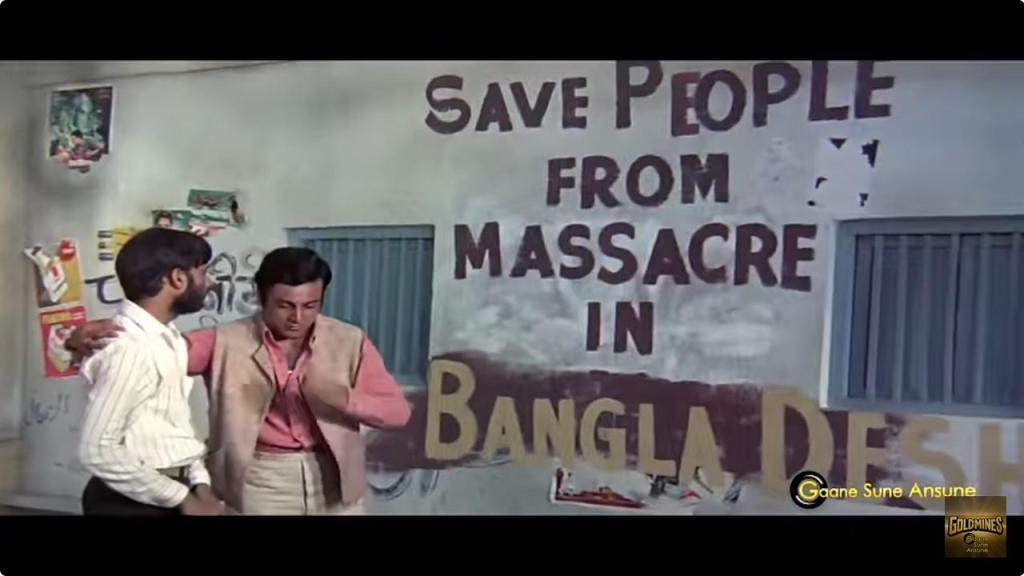
Midway through the song, shot on a rather low budget set, you see a graffiti on a street wall stating, “Save people from massacre in Bangladesh”. The film was released when the Bangladesh Liberation War was at its peak and while Twitter or other social media channels didn’t exist back then, cinema was a medium of propagating ideas. Today most viewers might miss it but I do believe audience back then must have noticed it. Back then “all eyes were on Dhaka”, that 53 years later the massacre continues but our eyes choose to look elsewhere is telling…
While Haal Chal delves in to the external stimuli, Koi Hota looks deep within. Sung by Kishore Kumar on a tune by Salil Chowdhury which pulls you into spell of melancholy, the song talks about loneliness, missed opportunities, fractured dreams and the sheer longing for acceptance. It also carries forward the other aspect of the film; the declining moral fabric of our society, where self-centeredness and the relentless pursuit of material aspirations takes a toll on relationships and joy at large. Greed pushes us into isolation and decay but as things stand, we have collectively chosen to pursue it over emotional fulfillment. That we will eventually reduce ourselves to or already have turned zombies is a no-brainer.
Meena Kumari in the central role is every bit the tragedy queen. Although the screenplay offers her plenty of sympathy, personally I found her unwatchable and over the top, Gulzar the captain fails to reign-in and mellow it down or maybe he kept it deliberately that way to cash in on her persona. Shatrughan Sinha is mediocre and I wonder how he managed to find work for so many years. Contrast that with Vinod Khanna, the word dapper seems woefully inadequate to describe his screen presence. That he arrives on a 22 inch ordinary bicycle and makes it look cool is a statement that very few could pull off.
We have been conditioned to see established characters in a particular way, so it feels odd to see the gentle Ramesh Deo in a negative frame, funny Asrani & Paintal as rowdies and the suave Danny Denzongpa as a simpleton. They all have moments to shine, for instance, when the students disrupt and damage the campus, Paintal leaves with a disapproving note, he is part of the ideology but doesn’t necessarily agree with the execution, too much to expect from the polar worlds we inhibit today. Danny who for the most part remains in the background with his hand puppet, eventually unleashes violence when his composure and tolerance is pushed to the extreme. Little moments like these is where the support cast add gems and jewels to the narrative.
It is because I (and maybe some of you) have been watching the leftist filmy propaganda being exposed is why I could not ignore Meena Kumari specifically using the word Madrasa for school/college, not once but many times. Was Gulzar trying to normalize the word, or am I reading too much into it? However, other than this little mischief the film undoubtedly leaves you sufficiently provoked in a good way.
Although a tad bit slow for today’s sensibilities, it is definitely watchable and is a decent reminder to search for the right set of values this election season. Baki aapki dua se sab thik thak hai..!
 Aisle Seat Stories